
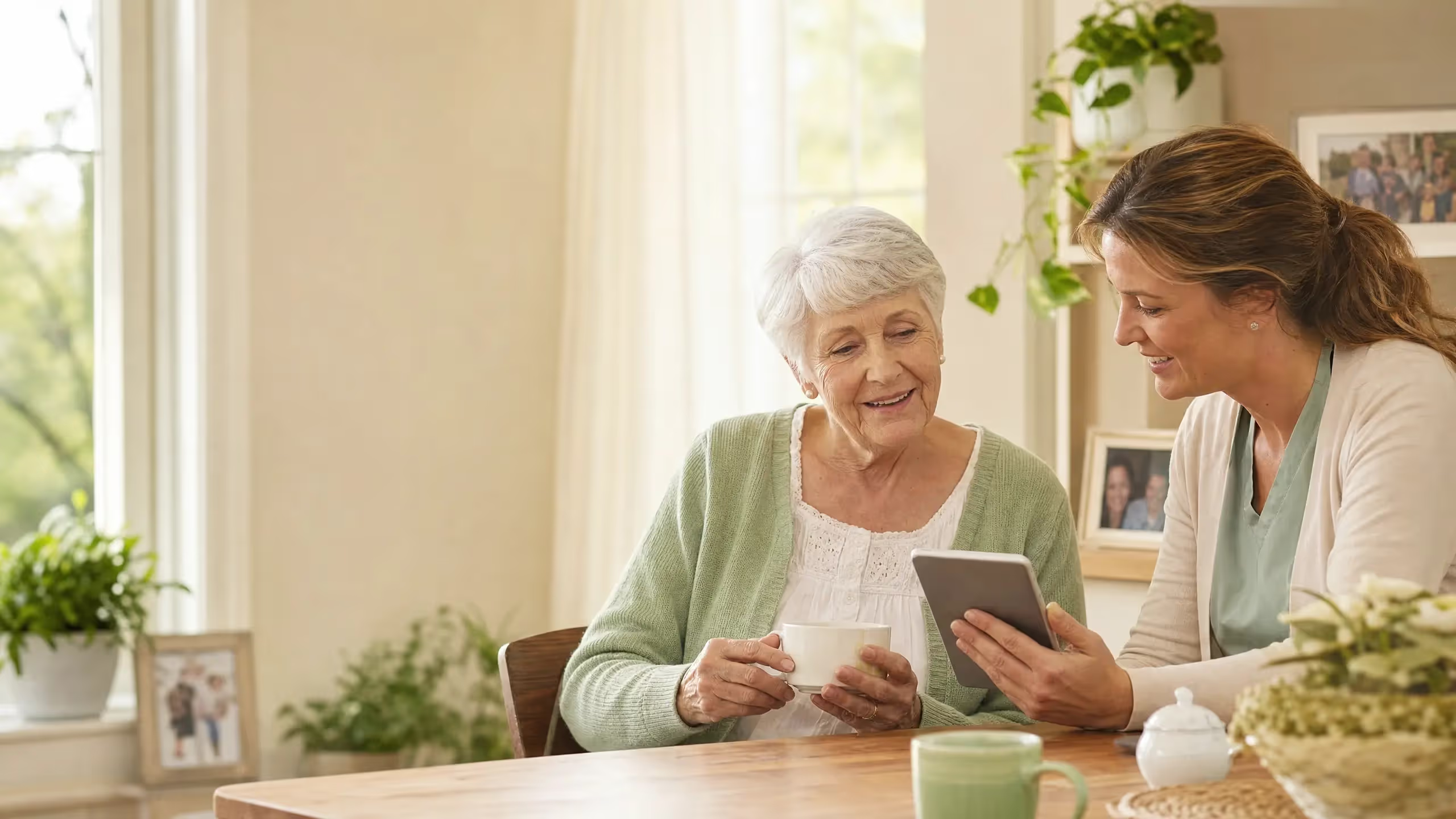
After a decade practicing emergency medicine, I have witnessed countless seniors land in hospitals or care facilities simply because high-quality in-home support was missing. What I once assumed was a relic of the past has proven to be urgently needed again: the role of the homecare physician. Over the past year, my colleagues and I developed Medically-Supervised Homecare™, a model designed to help seniors thrive at home for life.
We have visited hundreds of Calgary homes, sat with families to understand their challenges, and partnered with them to support aging with dignity and independence. Across many families, we have found patterns that distinguish those who succeed in helping seniors age at home from those who are forced into crisis decisions. In some cases, what truly works is counterintuitive to prevailing wisdom. The following are some of the most important patterns we’ve found.
They (successful families) talk openly — and early
While confronting the realities of aging can be uncomfortable, families who speak openly about both an illness a senior might experience — and its impact on spouses and children — make wiser, more balanced decisions. In our family meetings, we consider it critical to have all involved children and caregivers present.
Often, one child has quietly shouldered immense caregiving responsibilities without expressing how deeply this has affected their own life. Spouses, in particular, may minimize their exhaustion until it becomes unsustainable. At the same time, seniors themselves often struggle to articulate how their disability has changed their sense of self. When all perspectives are heard, choices that once felt impossible often become clear. Seniors who are reluctant to receive help, for example, are much more inclined to do so when they understand that it actually represents freedom for their family as well as for themselves. When support is framed this way, it preserves the dignity of the patient.
They act before crisis
Families who notice increasing gait instability or forgetfulness are wise to seek professional support before a crisis occurs. As in many areas of life, early investment often improves outcomes while reducing long-term costs. Nowhere is this clearer than in the case of falls, where months of observable decline lead to the predictable outcome of a catastrophic injury. Just as importantly, timely support can prevent caregiver burnout for family members before it takes hold, preserving both health and family relationships. Accepting help does not diminish independence. On the contrary: When introduced early and in measured amounts, support preserves seniors’ autonomy by preventing hospitalizations and placement in facilities.
They make rational risk–benefit decisions about facilities
Individuals who have spent their lives making thoughtful, evidence-based decisions are rarely quick to enter care facilities. They ask better questions and get clearer answers on the true utility of facilities. For example: “Does moving into a facility after a fall actually prevent future falls?” (In our opinion, clearly not). Too often, facility-based care becomes the default not because it is medically superior, but because it offers legal protection or represents the path of least resistance. Facilities can create an illusion of safety without delivering better health outcomes. They carry real limitations as well as the risk of medical challenges, including significantly higher infection rates, caused by medical examinations or treatment. Safety and independence do not have to be a trade-off. With proactive medical oversight, individualized care planning, and regular reassessment, most medical risks are actually better managed at home with one-to-one homecare support.
They don’t downsize too early
Aging on its own is not a reason to leave a long-time home. With the right support, most seniors can thrive in virtually any setting, including large single-family homes or even acreages. Familiar environments are deeply embedded in memory, and this continuity becomes especially crucial when cognitive changes begin to emerge. In our experience, staying in a long-time home offers substantial physical and emotional benefits that often outweigh the manageable inconveniences of upkeep.
A final thought
Families who succeed in helping seniors (with aging at home) do not necessarily work harder or spend more money. Instead, they intervene earlier, more thoughtfully, and with clearer priorities. Doing so allows successful seniors to stay home and enjoy better health outcomes. They can often do so at lower cost than moving to a facility — all the while preventing burnout in the family. This is what we call a triple win!
.avif)
